
Denver Energy Code Compliance - What You Should Know
As of December 31, 2025, the the City and County of Denver has officially adopted the 2025 Denver Building and Fire Codes, which incorporate the 2024 I-codes (except the Energy Code, which incorporates the 2021 IECC).
Under the 2025 Denver Energy Code, commercial buildings - including multifamily residential buildings over three stories - must demonstrate compliance using one of several approved pathways. Those pathways include one prescriptive path and three performance paths.
While the prescriptive path offers a straightforward approach, it provides limited design flexibility and often necessitates strict adherence to specific component requirements. It also limits the window to wall ratio to 30% or 40% if daylight control criterials are met.
The three performance paths include: Performance Rating Method with energy cost(C407), Performance Rating Method with site energy(Appendix SE), and Target EUI(Appendix PT).
The Performance Rating Method with site energy is likely the most feasible option for many projects. This approach compares the proposed design to a "stable baseline" based on ASHRAE 90.1 2004, which utilizes fossil fuel heating with efficiencies ranging from 75% to 80%. Modern design solutions, particularly heat pumps, generally demonstrate better compliance when evaluated using the site energy metric rather than the energy cost metric.
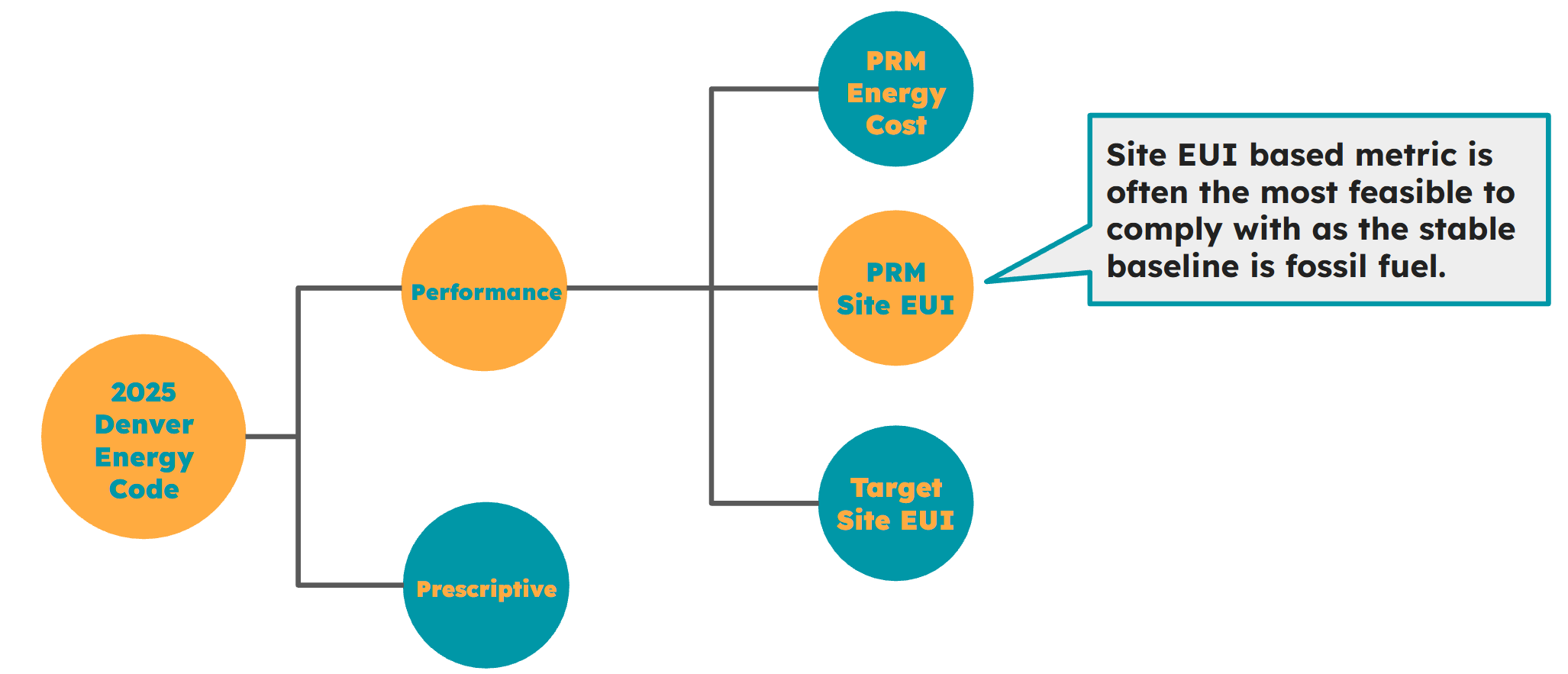
The Target EUI approach (Appendix PT) serves as a viable alternative for some building types should the Performance Rating Method with site energy prove unsuccessful. Under this compliance path, the building is compliant if its modeled predictive EUI remains below the established threshold.
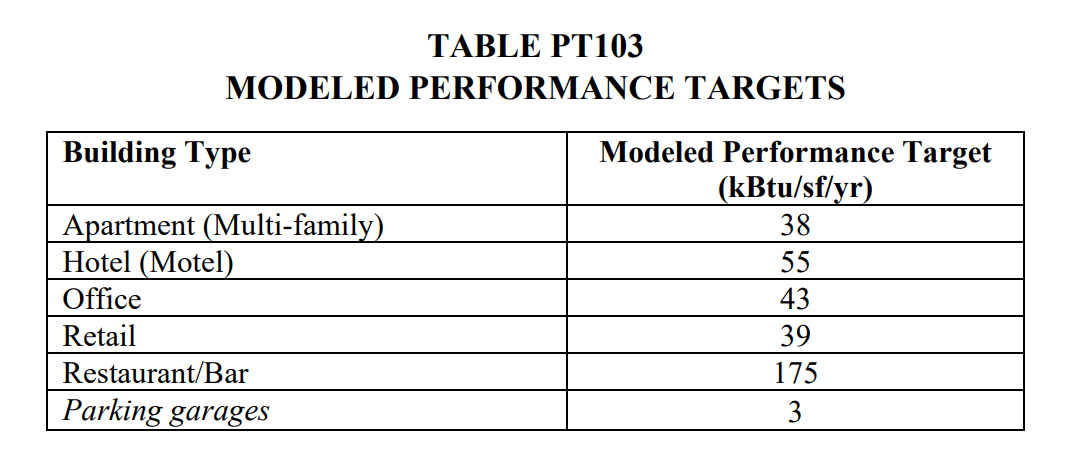
However, adopting this strategy carries specific risks due to Denver's "Energize Denver" Building Performance Standard. This policy imposes penalties on existing buildings based on their site EUI, with rates ranging from 5 to 10 times the cost of electricity and 15 to 30 times the cost of natural gas.
If the Target EUI path is selected for new developments, owners may utilize it as a benchmark against actual operational data following a year of occupancy. However, because Denver's energy modeling guidelines strictly regulate code compliance models, these simulations may differ significantly from real-world performance. Such discrepancies between predicted and actual energy use can result in potential legal complications.
Denver’s energy code also requires third party air leakage test for the dwelling and sleeping units. For buildings with eight or more testing units, the greater of seven units or 20 percent of the testing units in the building shall be tested, including a top floor unit, a ground floor unit and a unit with the largest testing unit enclosure area. For each tested unit that exceeds the maximum air leakage rate, an additional two units shall be tested, including a mixture of testing unit types and locations.
Denver Energy Code requires commissioning (Cx) for the building systems. a Commissioning Plan, a Preliminary Commissioning Report, a System Balancing Report, and a Final Commissioning Report should be provided to the owner or owner’s representative.
Beyond standard energy codes, Denver enforces a Green Buildings Ordinance applicable to new developments, roof permits for existing buildings, and additions that exceed 25,000 square feet. To fulfill the requirements of Sec. 10-301. (a)(2), the code compliance energy model may be used in combination with other strategies.
Lastly, Denver enforces limited, mandatory use of the 2022 Denver Green Code for all new commercial or multifamily projects and major renovations starting May 1, 2023. Project teams need to submit a mandatory checklist and compliance documentation at the time of permitting.
Pro Tip: Denver has some of the heaviest energy code compliance documentation requirements in the country. You should know the rules and submit all relevant reports to streamline the permitting process.
Let us know how we can help you!